Exercise: Best Medicine for Back Pain

Good NPR article suggesting that the best way to ditch back pain is to exercise…any kind of exercise.  Start moving, and don’t look “back” !

“While back belts and shoe insoles didn’t seem to offer a benefit, they determined, exercise reduced the risk of repeated low-back pain in the year following an episode between 25 and 40 percent. It didn’t really matter what kind of exercise — core strengthening, aerobic exercise, or flexibility and stretching. Their review was published Monday in JAMA Internal Medicine.

“If there were a pill out there that could reduce your risk of future episodes of back pain by 30 percent, I’d probably be seeing ads on television every night,” says Dr. Tim Carey, an internist at the University of North Carolina in Chapel Hill who wrote an accompanying commentary in the journal.

And yet, he says, health care providers don’t prescribe exercise nearly enough, given its effectiveness. Carey says fewer than half of patients participate in an exercise program, even if they have long-term back pain.

In researching what docs do and don’t prescribe, Carey found that passive treatments were much more common, like ultrasound or traction treatments, back belts and orthotic insoles. “Prescribing ineffective treatments for patients may actually distract them and give them a false sense of security away from treatments that are actually beneficial,” Carey says.

The discrepancy between what’s most effective and what’s most prescribed highlights a bigger problem: The health industry is centered on sellable products, and exercise isn’t one.”

http://www.npr.org/sections/health-shots/2016/01/11/462366361/forget-the-gizmos-exercise-works-best-for-lower-back-pain?utm_source=facebook.com&utm_medium=social&utm_campaign=npr&utm_term=nprnews&utm_content=20160111

Massage Therapy: Decreased Fibrosis, + Recovery

Very interesting study done, published in the Journal of the Neurological Sciences with the title: “Manual therapy as an effective treatment for fibrosis in a rat model of upper extremity overuse injury”.  (Study used rats, not human subjects).  It is much easier from a human ethics point of view to artificially induce repetitive movement disorders in rats than it is doing so in humans…

Bottom line: results indicate that massage therapy lead to decreases in pain and improved function in repetitive movement disorders.

Abstract: Key clinical features of carpal tunnel syndrome and other types of cumulative trauma disorders of the hand and wrist include pain and functional disabilities. Mechanistic details remain under investigation but may involve tissue inflammation and/or fibrosis. We examined the effectiveness of modeled manual therapy (MMT) as a treatment for sensorimotor behavior declines and increased fibrogenic processes occurring in forearm tissues of rats performing a high repetition high force (HRHF) reaching and grasping task for 12 weeks. Young adult, female rats were examined: food restricted control rats (FRC, n = 12); rats that were trained for 6 weeks before performing the HRHF task for 12 weeks with no treatment (HRHF-CON, n = 11); and HRHF task rats received modeled manual therapy (HRHF-MMT, n = 5) for 5 days/week for the duration of the 12-week of task. Rats receiving the MMT expressed fewer discomfort-related behaviors, and performed progressively better in the HRHF task. Grip strength, while decreased after training, improved following MMT. Fibrotic nerve and connective tissue changes (increased collagen and TGF-β1 deposition) present in 12-week HRHF-CON rats were significantly decreased in 12-week HRHF-MMT rats. These observations support the investigation of manual therapy as a preventative for repetitive motion disorders.

Link to abstract (I have read the full study) – http://www.jns-journal.com/article/S0022-510X(15)30093-9/abstract

Detoxes – An Undefined Scam

“It is important to understand, however, that the human body is remarkably resilient. The liver, kidneys, lungs, and several other organs work around the clock to remove harmful substances and excrete waste products of metabolism. They don’t need any help from pepper-infused lemonade. Moreover, there is evidence that commercial detox supplements are not based on facts. A 2009 investigation found that not a single company behind 15 commercial cleanses could name the toxins targeted by their treatment, agree on the definition of the word ‘detox’, or even supply evidence that their products work.”

https://examine.com/blog/detoxes-an-undefined-scam/

Special Interest Groups

Not Familar with Laws of neuropathology

Well, actually, the NFL has been aware of the obvious neuropathology going on in its players for some time now, but has been able to feign innocence by conducting subpar studies of its own, and by sweeping good science under the rug.

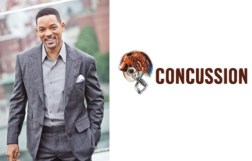
Will Smith - Concussion

Until now – with the emergence of the documentary League of Denial (on Netflix) and the dramatized version of it – Concussion, featuring Will Smith who plays Bennet Omalu, the neuropathologist who takes on the NFL “corporation”, David vs. Goliath-style.  I would highly recommend both films, and would recommend seeing the documentary prior to the Hollywood version.

The obvious theme in Concussion is that football causes neuropathology or CTE (chronic traumatic encephalopathy), however perhaps the greater overarching theme is that science can be deliberately ignored by special interest groups.  CTE is endemic to football players in the United States which is rather unfortunate to players/their families – a relatively small scale.  However, deliberately sweeping away science can be pandemic/worldwide, affecting the entire global population (as per large oil corporations suggesting for years that global warming was not caused by human activity, when climate scientists knew all along that it was).

Sidenote:  Today, I passed by two homeopathy clinics (one on Yonge, one on Eglinton).  Despite being absolutely, 100%, denounced by science, homeopathy continues to exist, because of special interest, and/or because of a lack of familiarity (either the patient or the clinician) with the concepts of confirmation bias, placebo, and regression to the mean.

Understanding Patients

John Hopkins Hospital

An interesting quote by a famous Canadian doctor, Sir William Osler, and I do believe there is some truth to this,

“It is much more important to understand what sort of person has a disease than what sort of disease a person has.”

Fun fact:  William Osler’s father, Featherstone Lake Osler (1805–1895), the son of a shipowner, was a former Lieutenant in the Royal Navy.  In 1831 Featherstone Osler was invited to serve as the science officer on Charles Darwin’s voyage to the Galapagos Islands, but he turned the offer down because his father was dying.

Another fact:  Although a decorated physician and even considered by some as the “Father of Modern Medicine”, Osler was “in support” of bloodletting, which is now a largely abandoned practice and considered pseudoscience.


Intrinsic Motivation and SAID

Patrick O’Sullivan wrote a fantastic auto-biographical piece recently, in which he recounts the horrific abuse that he endured throughout his childhood at the hands of his father.  His father beat him quite severely, and would force him to train long hours outside the rink (weight training + running etc.) in order to help his son realize NHL dreams that he was never able to attain himself.

Patrick does a great job of summarizing these painful experiences, and then alludes to two very important principles in sport psychology/physiology.  The first is SAID (specific adaptations to imposed demands) which I’ve spoken about before – he hints that it isn’t the extra weight training or long runs that make great players, but rather the passing/shooting/stick-handling practice that actually occurs on the ice.

“Having a 12-year-old kid run six miles after practice isn’t going to turn them into Jonathan Toews.  You know when you actually get good at sports? When you’re having fun and being creative. When you’re being a kid. When you don’t even realize you’re getting better, that’s when you’re getting better. If you’re not engaged in what you’re doing, it’s as helpful as taking the trash out. It’s just another chore.”

The other theme alluded to, is that of intrinsic motivation.  In this case, this simply means wanting to play hockey for the sheer enjoyment factor.

“But that’s not what some parents, even normal ones, want to hear. Honestly, that’s not the direction youth hockey is trending. When I was in the NHL, I’d be doing my off-season workouts at the gym with Daniel Carcillo and some other NHL buddies, and we’d look over and see 12-year-old kids doing the same two-hour workout we were doing, with a trainer screaming at them the whole time. Half the time their parents would be there, yelling at them, too.  And it’s absolutely comical. It’s doing nothing.

True story: I played with Drew Doughty his rookie year in Los Angeles. He came into camp and he could barely do one rep on the bench press. He’ll laugh about it now. He was not in shape at all, at least in the way these “Old Time Hockey” blowhards talk about it. Then we’d go out for practice and he’d be the best player on the ice. Doughty was just a pure, natural hockey player with incredible vision and a brain for the game.”

http://www.theplayerstribune.com/patrick-osullivan-nhl-abuse/

Clinical Pearls from a PT familiar with modern pain science

Nice blog post from Jarod Hall, physiotherapist.  FYI – DDD means “degenerative disc disorder”, and DJD is “degenerative joint disease”.  Two of my favourite points:

  • Stop basing everything you do and the way you think off of a patient’s x-ray or MRI. We now know and have a plethora of evidence that tissue damage often does not correlate to pain presentation. Imaging is important, but we need to talk patient’s off of the I have DDD/DJD cliff and onto the you don’t have to be in pain because of your imaging ride.
  • …the vast majority of those asymmetries, leg length discrepancies (if you are even able to get close to accurately diagnosing them), forward head rounded shoulder postures, increased lumbar lordosis, etc rarely actually have anything to do with your patient’s pain. Very often your patients sit in prolonged positions and don’t move/exercise much at all through the day. Merely getting them moving in safe and progressive manner can be incredibly powerful

http://physicaltherapyfitnessandnutrition.blogspot.ca/2015/11/clinical-pearls-and-advice-from-young.html

Good Pain and “Trigger Points”

A few points, before you read on:

  1. In the manual therapy world, “muscle knots”, “trigger points”, and “MTP’s” (myofascial trigger points) are synonymous terms.
  2. There is such thing as “bad/ugly” pain, and this should be avoided.  It is not uncommon for therapists to inflict this sort of pain on clients.  There are veteran therapists out there that are guilty of this…this is simply the reality of the situation.

Ingraham, PainScience:

“Good pain. In massage, there is such a thing as “good pain.” It arises from a sensory contradiction between the sensitivity to pressure and the instinctive sense that it’s also a source of relief (probably mostly due to the phenomenon of trigger points: more about this below). So pressure can be an intense sensation that just feels right somehow. It’s strong, but it’s welcome. Good pains are usually dull and aching. It is often described as a “sweet” ache. The best good pain may be such a relief that really the only bad thing about it is just that it is breathtakingly intense.”

and

“Trigger points are fairly well-defined physiologically. We know what they are, and we know where they live. They are essentially a miniature spasm, a small patch of a muscle tissue that is super-clenched. They are common, and responsible for most of the garden variety aches and pains of humanity*, ranging from mild to crippling. And we know that they can, sometimes, be relieved simply by “ironing them out” with skillful thumbs.

When you press on a trigger point, it’s going to feel painful because it’s a swampy little patch of muscle in metabolic overdrive, its sensory nerve endings bathed in junk molecules. But it’s also going to feel like a relief to have any of that problem taken away! As discussed above, relief from trigger points may occur simply through crushing and destroying the cellular machinery of it. But there are numerous other possible mechanisms, such as a tiny, localized stretching of the spasm — a miniature version of what you do when you stretch out a big leg muscle to ease a charlie horse. Another likely mechanism is that the pressure squishes stagnant tissue fluids out of the spot, allowing them to be replaced by fresh circulation.”

*When Ingraham says “garden variety aches and pains of humanity”, he simply means ordinary muscle knots

Why A Treatment Works, and Why That Matters

A beautifully and simply written blog by Todd Hargrove, that is really worth a read to anyone that has ever received therapy and/or has questioned its explanations: Todd Hargrove Blog

Here are some of my favorite excerpts:

1. Why exactly does someone feel better after massage? Or acupuncture? Or foam rolling? Or a chiropractic adjustment, or wearing K-tape, or doing mobility drills, or a hamstring stretch?  There are some good answers to these questions, and the interesting thing I’d like to point out in this post is that quite often, the therapist doesn’t know them. Or even care about them! Or maybe the therapist has heard the good answers, but prefers alternative bad answers that are far less plausible given the current state of relevant science.

Speaking of bad explanations: Foam rolling probably doesn’t work by breaking adhesions or melting fascia. Chiropractic manipulation doesn’t put joints that are “out” back “in.” Deep tissue massage doesn’t get rid of toxins or “muscle knots.” Acupuncture doesn’t access special points or meridians – putting the needles in random places works just as well. Some sham surgeries work just as well the real thing. Motor control exercises often work to reduce pain even though motor control hasn’t changed.

None of this means that the above treatments can’t work to make someone feel better. It just means they don’t work in the manner advertised. And no this doesn’t mean that everything is just placebo (that’s a confusing word without a clear meaning.)

In general, it seems that therapists have a strong bias towards the idea they are fixing “issues in the tissues.”  And they tend to ignore issues in the more complex systems in the body – nervous, immune, autonomic – which are very sensitive to even minor inputs and have a great influence over how we move and feel. Maybe this is because these systems are less visible, or tangible, or just not what practitioners learned about when they were in school.

I was trained as a Rolfer and taught that Rolfing works by changing fascia. So when people got up from the table and said they felt taller, or looser, or had less pain, this was because their fascia had somehow changed for the better.

After doing some research about the deformability of fascia in response to manual pressure, I decided this was not a good explanation for our observations. A better explanation would involve the nervous system, which is constantly adjusting muscle tension, movement patterns, perception, and pain sensitivity in response to new sensory information, including the highly novel sensory information caused by bodywork.

Of course it’s kind of a bummer to learn that a central premise of your education is incorrect. But the good news is that this doesn’t mean people can’t be helped with your treatment. That is a completely separate issue. So my attitude was – OK, it’s not about the fascia, but that doesn’t mean I can’t help people.

2.  Imagine someone with neck pain goes to the chiropractor, is told their neck is “out”, gets cracked to put it back “in”, and then immediately feels much better. What’s the harm if they think that pain relief came from some form of realignment?

Maybe in the short term there is no harm, but false beliefs have a mischievous way of eventually causing problems in the long term.

Let’s say the neck pain comes back. The client thinks her neck must be “out” again so she needs another crack. So she overlooks other potential solutions like exercise, rest, or gentle movement. If the neck pain continues, she might eventually develop the pathological belief that her neck is fragile and unstable. This can have a nocebo effect – creating further pain and avoidance of healthy movement.

I have seen many clients with similar misconceptions, and this has cost them significant time, money, anxiety, and confusion.

And I’m not just talking about the clients of chiropractors.

I have seen yoga people who are always stretching; Pilates people always stabilizing; corrective exercisers looking for microscopic muscle imbalances; joint mobility fans perpetually mobilizing, as if their joints need a constant bath in synovial fluid, or will start knitting themselves together with some sort of fascial “fuzz” after just a few minutes of stasis. Rust never sleeps!

All these pathological behaviors ultimately stem from false beliefs about why certain therapies have worked for them in the past. These beliefs cluster around the idea that they have corrected “issues in the tissues” as opposed to temporarily adjusting the sensitivity of the nervous system.

The bottom line is that false beliefs, no matter how small, are like viruses – they multiply, get passed to others, mutate to form super bugs, and can eventually cause disease. Don’t spread them people!
Touch inhibits subcortical and cortical nociceptive responses

Very interesting study looking at the mechanisms behind the proposed analgesic (pain-reducing) effects of “touch”.

Link to study: Study in Journal Pain

Take home message for readers: “Touch induced a clear analgesic effect” – meaning that simply be touched, can have a pain-reducing effect.  Huge implications here for therapies of all sorts.